Three prior surveys for the Geoid Slope Validation Surveys have been conducted to support the validation of the current NGS geoid model. The astronomical observations for this project were conducted using Digital Zenith Camera Systems (DZCSs) developed in Switzerland. In 2019,
NGS developed its own astrogeodetic system: TSACS. I proposed to use an upgraded Turkish DZCS and QDaedalus systems, collaborating with NGS, to conduct geoid surveys in coastal Louisiana to further improve the NGS geoid model. The improved height datum is anticipated to address hazard responses including climate-induced hurricane landfalls, and anthropogenic fluid extraction.
Bio: Catherine (Katie) McManus is a Ph.D. student in Biology at Temple University. Her research uses a comparative approach to explore the evolution of the cabbage white butterfly (Pieris rapae) in response to urbanization at the phenotypic and genomic levels. Support from GWIS will allow her to complement traditional fieldwork with cutting edge genomics. Specifically, she will sequence urban and nonurban butterflies to evaluate the genomic signatures of selection and associate them with environmental factors related to urbanization. Importantly, this work will reveal the predictability of evolution in response to urbanization and elucidate genetic constraints on evolutionary responses in human-dominated landscapes.
Project Title: Parallel phenotypic and genomic evolution in an urban butterfly
Project Abstract: Parallel evolution occurs when populations exploit identical phenotypic and genetic solutions when challenged with similar selective pressures. Urbanization has been established as a driver of rapid evolution as it presents unique yet ubiquitous evolutionary challenges. However, it is currently unclear if shared selective pressures are resulting in contemporary parallel evolution in a single biological system across cities. I will investigate parallel evolution at the phenotypic and genomic levels in a common butterfly, Pieris rapae (the cabbage white), across three US cities. I will measure morphological traits of urban and nonurban butterflies, evaluate the genomic signatures of selection and associate them with environmental factors related to urbanization, and determine the route of selection undertaken in each city. Using a comparative approach, I will explore whether there are repeated evolutionary patterns across multiple American cities. Importantly, this work will reveal the predictability of evolution in response to urbanization and elucidate genetic constraints on evolutionary responses in human-dominated landscapes.
Profile: https://cst.temple.edu/about/faculty-staff/catherine-mcmanus
Mia Radovanovic
Fellowship: Nell Mondy + Vessa Notchev Fellowships

Bio: Mia Radovanovic is a Ph.D. student in Psychology researching how conflicting messages and power dynamics influence children’s persistence and exploration. In North America, innovation and independence are highly valued; yet girls are disproportionately encouraged to people-please. Mia’s work has documented that these competing messages of independence and obedience place greater pressure on girls to persist in taught solutions, while boys were more comfortable exploring their own ideas when teachers are wrong. With the GWIS fellowship, she will expand her existing work by investigating the socialization process shaping these disparities, examining task gender typicality effects and whether gender differences are present before the transition to formal schooling. In performing this investigation, she will collect behavioral and physiological measures, as well as performing qualitative interviews to elaborate the full nuance of children’s experiences in these settings and to generate data to inform future interventions.
Project Title: Quantifying and Understanding Gender Disadvantages in Reactions to Incorrect Teaching
Project Abstract: While teaching is generally useful and correct, concerns about misinformation in education have intensified as policymakers restrict teachers’ ability to teach controversial topics. Thus, children increasingly need to evaluate the accuracy of taught information and move beyond inaccurate teaching by exploring alternatives. Critically, Mickelson’s sex-role socialization hypothesis posits that girls and socialized to obey authority figures without protest, which will likely lead to disadvantages in these contexts. Indeed, my previous work (Radovanovic et al., 2022) has demonstrated that when children aged 7 to 10 years old were presented with incorrect teaching, girls persisted more in the taught solution but explored less than boys, which mediated differences in solving and learning. The present work elaborates the theory further to understand the implications of these gender differences through several novel components. First, as many gender stereotypes are not present in preschool, we will utilize a larger age range to assess whether experience in education widens disparities. Second, we will employ three distinct educational and non-educational games with different gender stereotypes to understand the ubiquity of these differences. Finally, to elaborate policy implications for education, I will collect physiological and mental health measures, and conduct qualitative interviews to identify avenues for future interventions.
Profile: https://radovanovicm.github.io/website/
LinkedIn: https://ca.linkedin.com/in/mia-radovanovic-5262aa120
Oluwatoyin Campbell
Fellowship: Nell Mondy Fellowship
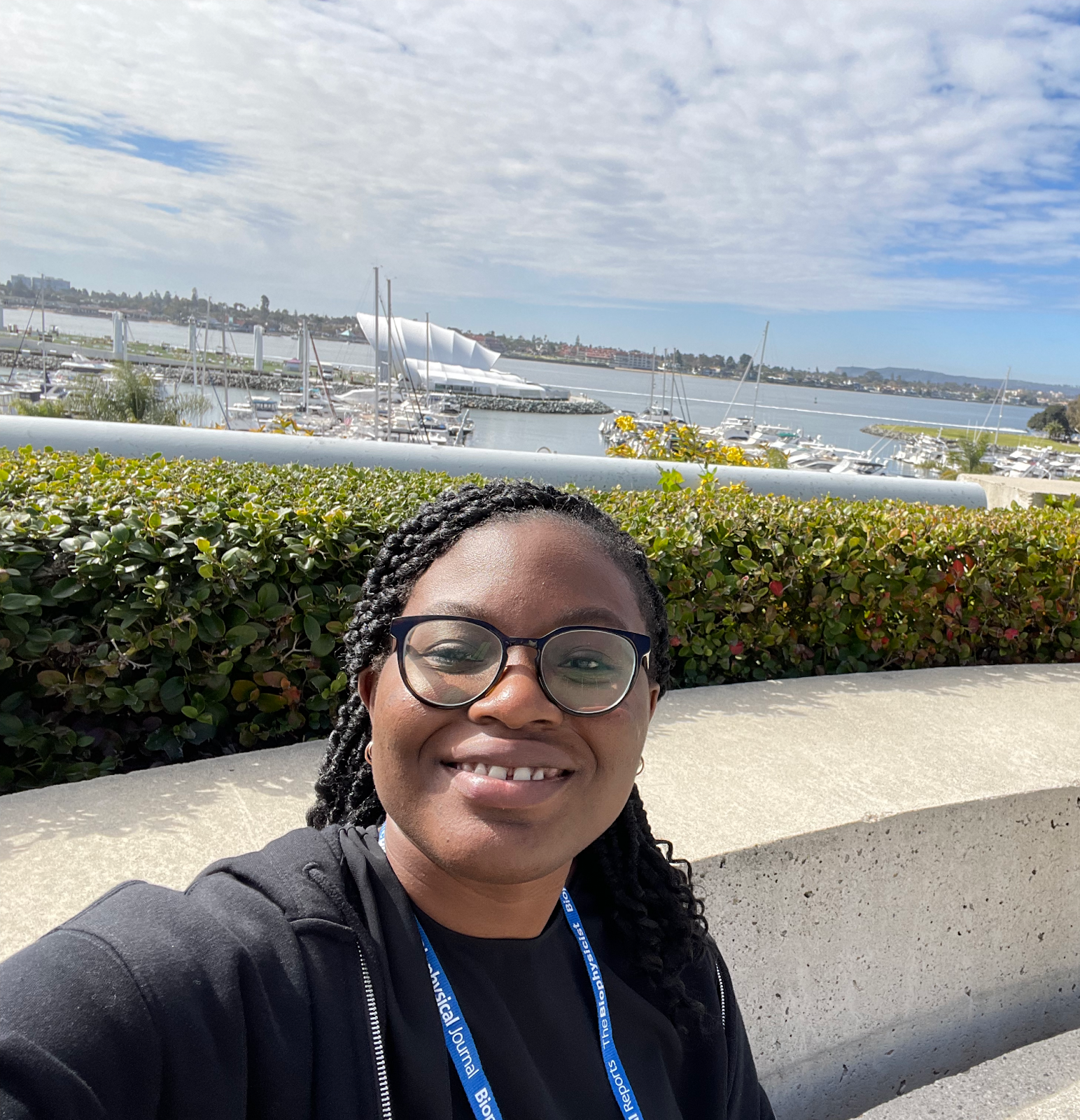
Bio: Oluwatoyin is a PhD candidate in the Chemical and Biological Engineering department at the University at Buffalo. In her research, she utilizes molecular dynamics simulations to study interactions between the hepatitis C p7 protein and cell lipid membranes to unravel the role of this protein during molecular pathogenesis of hepatitis C infection. Specifically, she evaluates the effect of incorporating complex lipid compositions into these membrane models to understand how this contributes to the interplay between protein and lipid dynamics and the function of p7 during virus formation. With the GWIS fellowship, she aims to characterize the effect of protein concentration on changes to protein structural dynamics and membrane lipid distribution, and quantify the energetic cost of protein insertion. This research will provide detailed molecular-level understanding of the interplay between protein and lipid dynamics in early mechanisms of disease, and contribute knowledge that will be useful for development of more effective therapeutics for hepatitis C patients.
Project Title: Characterizing Protein-driven Membrane Remodeling: Molecular Mechanisms of p7 in Chronic Hepatitis C Infections
Project Abstract: Interactions between viral proteins and lipid membranes aid in formation of viruses and disruption of normal lipid metabolism. In hepatitis C virus (HCV), the p7 protein partakes in viral assembly and is important for continued virus production. Though this protein is described to be a key player in disrupting lipid metabolism in infected cells, how it interacts with its lipid environment is largely unknown. I hypothesize that p7 is sensitive to its lipid environment and able to change the distribution of lipids around it, and this helps with virus formation. To clarify the mechanism of p7 at the molecular level, molecular dynamics simulations will be employed. With the goal of studying the effect of membrane lipid composition on these processes, I aim to characterize the effect of protein concentration on changes to the membrane and quantify the energetic cost of protein insertion. According to recent knowledge, this will be one of the first works to observe p7 interactions with membranes containing up to 4 different lipid species. These complex models will provide detailed molecular-level understanding of the interplay between protein and lipid dynamics in early mechanisms of disease, and aid development of better therapeutics for hepatitis C patients.
Profile:
LinkedIn: https://www.linkedin.com/in/oluwatoyin-campbell
Google Scholar: https://scholar.google.com/citations?user=QXBx26MAAAAJ&hl=en
Swapnaa Balaji
Fellowship: Nell Mondy Fellowships

Bio: I am a PhD student in the department of Experimental Therapeutics and Pharmacology at the University of Toledo. My lab works on the discovery of novel anti-cancer agents for the treatment of solid and liquid tumors. My research focuses on the discovery of novel anti-cancer agents for the treatment of advanced prostate cancer. Prostate cancer is a highly heterogenous disease and its treatment is extremely challenging owing to the development of drug resistance and adverse effects. During my PhD, I discovered a novel quinoline based molecule that effectively kills prostate cancer with the least possible side effects. Our next objective is to further delineate the mechanism of its anti-cancer activity. This knowledge will help us design better drugs for prostate cancer with more selectivity which is crucial in eliminating adverse effects associated with chemotherapy. We are strongly convinced that this drug carries immense potential and stands as a highly promising lead molecule in the progress of prostate cancer drug discovery research.
Project Title: Development of a novel anti-cancer agent for the treatment of advanced metastatic prostate cancer
Project Abstract: Prostate cancer is the second leading cause of death in men in the United States, with about 1 in 8 men being diagnosed with it at some point in their lives. Hormonal therapy is the first line of treatment for prostate cancer, but in many cases, the cancer progresses to a stage called metastatic castration-resistant prostate cancer (mCRPC), which means it has spread beyond the prostate gland and is no longer responsive to hormonal therapy. Chemotherapy is the most effective treatment option for mCRPC, but many patients develop resistance to the chemotherapeutic drug docetaxel, which is currently the first line treatment for mCRPC. Therefore, there is an urgent need to develop better chemotherapeutic drugs for treating mCRPC with the least possible harmful effects. In my PhD work, I have developed a novel chemotherapeutic drug that is highly effective at killing mCRPC cells while being selective for cancer cells and causing minimal side effects. Our lab is also working to improve the efficiency and reduce the side effects of this drug further, with the goal of eventually translating it for use in patients. Further research to develop more drugs with better selectivity and less side effects is also currently underway.
Profile: https://www.utoledo.edu/pharmacy/centers/tiwari/balaji-publications.html
LinkedIn: https://www.linkedin.com/in/swapnaa-balaji-a60a08122
Isabel Güiza-Gómez
Fellowship: Nell Mondy + Jean Langenheim + Elizabeth Weisburger Fellowships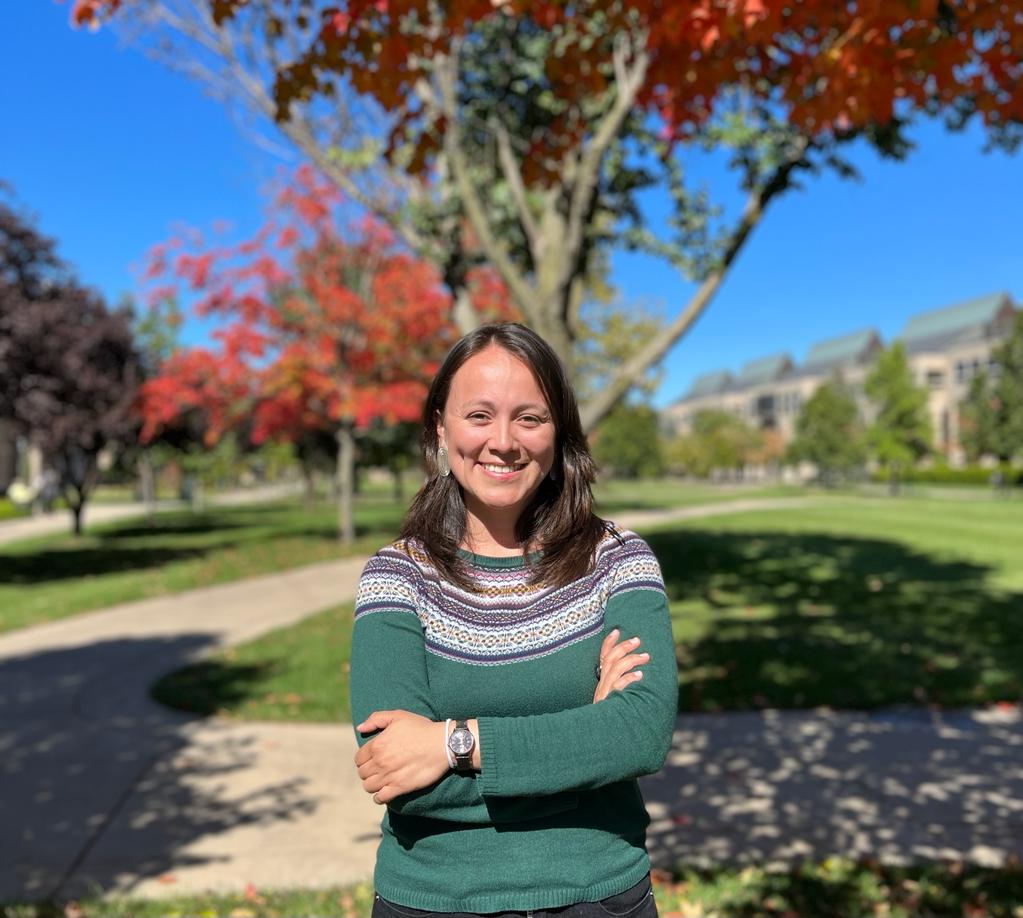
Bio: Isabel Güiza-Gómez is originally from Colombia and a PhD candidate in Political Science and Peace Studies at the University of Notre Dame. Her research focuses on insurgent and rural-poor collective action for wealth redistribution in the high-risk circumstances of civil war and entrenched inequality. By analyzing the Colombian case, her work seeks to explain why land redistribution is forged in civil war political transitions although peace processes are usually conceived of as the mere reworking of political democracy for previously excluded actors. Isabel will use the GWIS scholarship to examine insurgent negotiators' strength and strategizing to anchor redistribution to the terms of the agreement, and peasant, indigenous, Afro-descendant, rural women, and victims' collective action to shape the nature and content of redistributive reform, and the effectiveness and scope of policy implementation.
Project Title: Landing peace. Rural-poor mobilization and land redistribution in civil war political transitions.
Project Abstract: Civil war political transitions are usually conceived of as the reworking of institutions to strengthen political democracy for previously sidelined actors such as former guerrilla combatants and marginalized communities. Yet transitions also intend to deepen economic democracy by engineering the status-quo distribution of wealth that usually nurtures armed confrontation. Land redistribution is an oft-found commitment in peace agreements, which is ultimately implemented at varying degrees. Why is wealth redistribution forged in civil war political transitions despite prior theorizing expected it to be outweighed by political democracy? My dissertation project will explain the conditions under which land redistribution for the rural poor is forged in civil wars undergoing negotiated transitions. By diving into the Colombian case for the 1982-2004 and 2012-2024 periods, I hypothesize that rural-poor movements shape the nature and content of redistributive reform enshrined in negotiated settlements and post-transition policies, as well as the effectiveness and scope of policy implementation. I will employ a multi-scale, mixed-methods design including comparative historical analysis, process tracing, statistical modeling, in-depth interviews, focus groups, an expert survey, and text-as-data and GIS analysis. I will show that outsider, non-armed actors are a critical driving force behind land redistribution in highly unequal societies during democratization.
Profile: https://politicalscience.nd.edu/people/students/diana-isabel-guiza-gomez/
Google Scholar: https://scholar.google.com/citations?user=O1DzP3YAAAAJ&hl=en
Kelly DanielleMiller
Fellowship: Nell Mondy + Eloise Gerry + Ariel Hollinshead Fellowships
Bio: Kelly completed a Ph.D. in Biology at the University of Memphis in 2022. She is currently a postdoctoral researcher in the Bowers Lab and the program coordinator of the Meeman Biological Station at the University of Memphis. She is a field ornithologist and passionate advocator for everyone to get outside and learn about the natural world. Her research is broadly focused on the behavioral ecology and physiology of wild songbirds, with specific interests in avian coloration and brood parasitism. The GWIS fellowship will allow Kelly to study the role of ultraviolet (UV) reflectance from the nestling rictal flange (the enlarged, colorful tissue surrounding the bill) in parental feeding decisions. Brood-parasitic species, which lay their eggs in the nests of other birds, can have detrimental effects on host species, in part due to the comparatively larger size and faster growth rate of parasitic nestlings. However, in many cases, host parents preferentially feed brood-parasitic nestlings over their own. Kelly will experimentally reduce the UV reflectance from the rictal flange of brood-parasitic and host nestlings to determine if this visual cue plays a role in parental feeding preferences. The information gained from this study will be important in understanding the coevolutionary relationships between brood parasites and their hosts.
Project Title: The role of avian mouth coloration in offspring-parent signaling by host and brood-parasitic young: an experimental test
Project Abstract: Although the young of many bird species possess carotenoid-dependent yellow and ultraviolet (UV) mouth coloration, it is unclear whether between-individual differences in coloration correlate with parental feeding decisions and nestling body condition. This is especially true in the context of brood parasitism, where parasitic young often receive a majority of food from host parents. A preliminary study demonstrated significant differences in both yellow and UV coloration of the nestling rictal flange (the enlarged, brightly-colored skin around the mouth) between host prothonotary warbler (Protonotaria citrea) and parasitic brown-headed cowbird (Molothrus ater) nestlings; the cowbird rictal flange is duller yellow, but brighter UV-reflective compared to prothonotary nestlings. Here, I will experimentally reduce nestling rictal flange UV reflectance and quantify subsequent parental feeding decisions and nestling body condition. I predict that flange coloration will be associated with pre-manipulation nestling condition and that parents will use flange coloration to make within-brood investment decisions, favoring young that reflect more UV light from the rictal flange. This study will contribute to knowledge about brood parasitism and the life-history of the Prothonotary warbler, a species whose abundance has been declining significantly over recent decades.
Profile: https://www.ekbowers.com/people
LinkedIn: https://www.linkedin.com/in/k-d-miller
Valerie Martin
Fellowship: Nell Mondy + Eloise Gerry + Monique Braude Fellowships

Bio: Valerie Martin is an Ecology PhD candidate at Utah State University and the Rocky Mountain Biological Laboratory. She studies the chemical communication and outcomes of interactions between flower-inhabiting microorganisms, pollinators, and flowering plants. The GWIS fellowship will enable Martin to examine the scent emitted by four species of wildflowers and the cosmopolitan nectar yeast, Metschnikowia reukaufii, to understand how this widespread yeast species, which is commonly found in flowers on all continents except Antarctica, can impact flower display and attraction of pollinators. Nectar yeasts produce fermentation compounds, such as ethanol (alcohol) and acetic acid (vinegar), as well as scented higher alcohols derived from amino acids. Martin aims to understand how nectar microorganisms affect floral scent, bee behavior, and plant reproduction.
Project Title: Microbial mediation of bumblebee foraging tactics via modified flower phenotype
Project Abstract: Despite their ubiquity in nature, understanding the origin and maintenance of mutualisms remains a grand challenge in biology due to the prevalence of exploitative behaviors which can contribute to mutualism breakdown. For example, some insects capable of obtaining food through mutualistic pollinating behaviors choose to cheat instead. Nectar robbers are one such group of cheaters that drink nectar through holes that they puncture in flowers with their mouthparts. Prior research has yielded extensive information on which insects and birds can act as robbers, how they do so, the costs incurred by plants, as well as any adaptations plants may possess to resist or tolerate such behaviors. Unfortunately, too few studies have asked why some pollinator species sometimes choose to cheat their plant partners. It is increasingly recognized that variation in flower traits important for visitor attraction can arise from microbial metabolism of floral resources. Whether nectar-inhabiting microbes dispersed by nectar robbers and their scent and taste cues facilitate cheating and the breakdown of mutualism, however, remains to be investigated. Here, I will test the hypothesis that nectar-inhabiting microbes mediate the context-dependency of cooperative and exploitative behaviors displayed by floral visitors in pollination mutualisms.
Profile: https://www.usu.edu/biology/directory/graduate-students/martin-valerie
LinkedIn: https://www.linkedin.com/in/valerie-martin-wildflower

 Email to a Friend